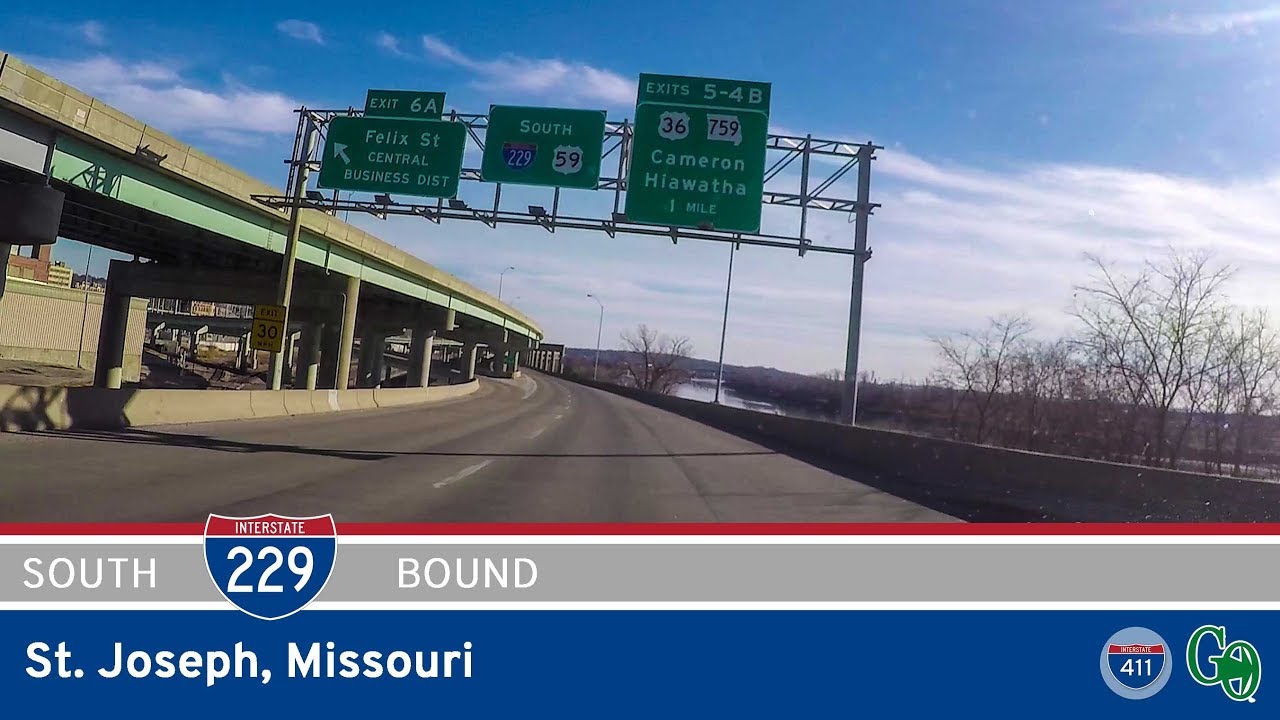
Take a drive along Interstate 229 through St. Joseph, Missouri—a rare double-deck freeway tracing the Missouri River. Explore this 7-mile route before its upcoming decommissioning changes the landscape forever.

Interstate 229 is a short auxiliary Interstate Highway that serves as a bypass or spur route in two separate regions of the Midwest: Sioux Falls, South Dakota, and St. Joseph, Missouri. Despite sharing the same designation, these two segments are completely unconnected and operate independently, each serving distinct regional traffic needs. Both play important roles in local transportation by easing congestion and providing direct access to central business districts and major highways.
The South Dakota segment of Interstate 229 forms an eastern loop around Sioux Falls, connecting Interstate 29 (I-29) on the south side of the city to Interstate 90 (I-90) on the northeast. At just under 12 miles in length, this route offers a vital corridor for commuters, commercial vehicles, and travelers seeking to bypass downtown. It serves key locations such as Sioux Falls Regional Airport, downtown Sioux Falls, and numerous residential and commercial areas. This loop also helps distribute traffic to major city thoroughfares like Minnesota Avenue (US-77) and Cliff Avenue.
The Missouri portion of I-229 is located in St. Joseph, where it spans approximately 15 miles, acting as a western bypass of the city. This segment provides a connection between Interstate 29 at both its southern and northern ends, forming a semi-loop. Uniquely, a portion of I-229 runs elevated through the downtown area along the Missouri River, offering scenic views and quick access to the historic business district. However, aging infrastructure and flooding concerns have raised debates about the future of this elevated section.
Though not long in mileage, both segments of I-229 are essential for traffic flow, commercial access, and regional mobility. In Sioux Falls, the highway supports economic development by linking industrial and retail districts, while in St. Joseph, it connects travelers to key riverfront and industrial areas. These corridors highlight how auxiliary interstates can significantly shape urban access and efficiency even without being long-distance routes.
Take a drive along Interstate 229 through St. Joseph, Missouri—a rare double-deck freeway tracing the Missouri River. Explore this 7-mile route before its upcoming decommissioning changes the landscape forever.